Local intelligence
IODD parsing over BLE and local interpretation directly on AION LIO.
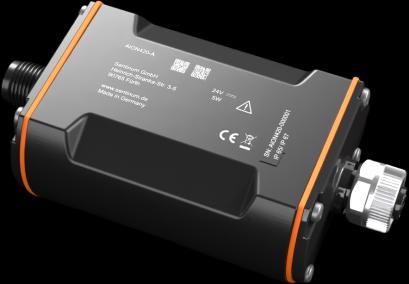
AION LIO is an integrated IO-Link master in adapter format: connect the sensor directly and send its process data over LoRaWAN®. Power supply and existing automation stay as they are – only the data becomes wireless.

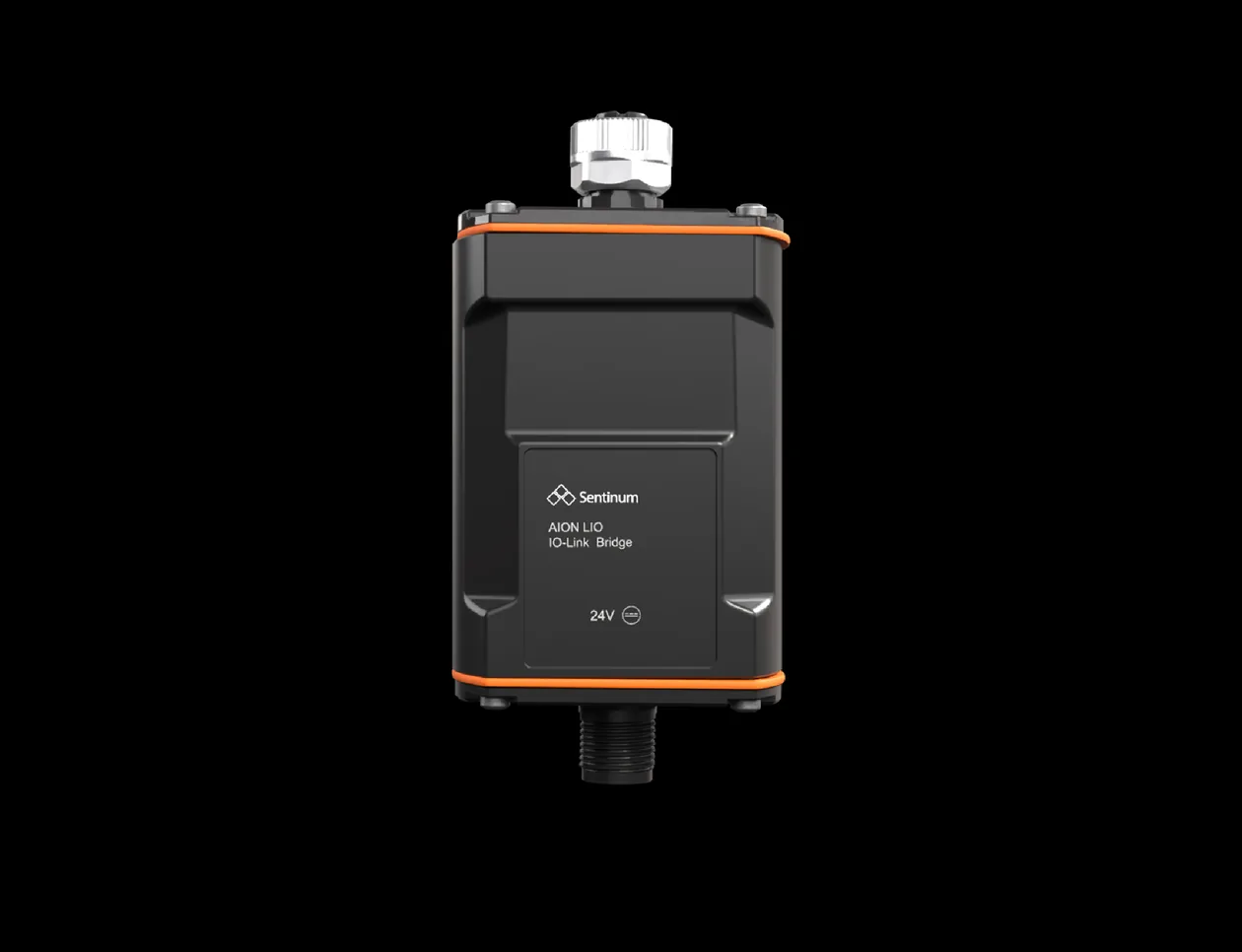
Adapter with integrated IO-Link master and LoRaWAN® uplink – datasheet, variants and ordering in the Sentinum shop.
Two knowledge pages for a quick introduction and a technical deep dive.
Architecture, range, device classes, security and industrial use cases explained clearly.
LoRaWAN®, mioty®, NB-IoT and LTE-M: wireless technologies from the Sentinum white paper, made accessible.
IO-Link is not one manufacturer's niche protocol. Anyone connecting sensors through AION LIO today chooses from a large, open product offering – and stays flexible.
AION LIO forwards the process data of the connected sensor – you choose the measurement task. Typical fields: pressure, flow, position, temperature, level and machine condition.
 Level
Track level in a tank, IBC or silo and trigger reordering early – instead of following a fixed schedule.
Example sensorifm KQ1001
 Condition
Vibration and temperature on pumps, fans and bearings – condition monitoring without new data cabling.
Example sensorifm VVB306
 Pressure
Monitor pressure in pipes and plants, keep to limits and document trends without gaps.
Example sensorifm PN7094
 Flow
Measure consumption and flow per line – the data originates where it is measured, not in the control cabinet.
Example sensorifm SA5000
AION LIO reads IO-Link sensors following the open standard – eight ifm sensors shown here as examples for level, pressure, humidity, flow, vibration and temperature. The sensor stays, the data path goes wireless.
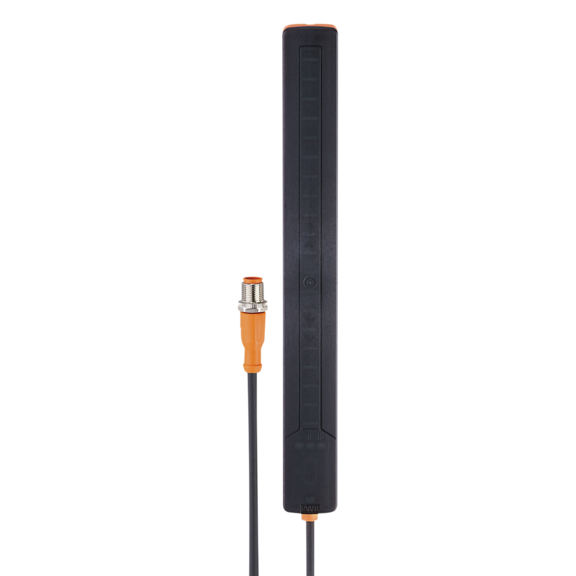 ifm KQ1001Level, capacitive
Capacitive level sensor for conductive media – with LED bar-graph indication and stackable mounting.
Level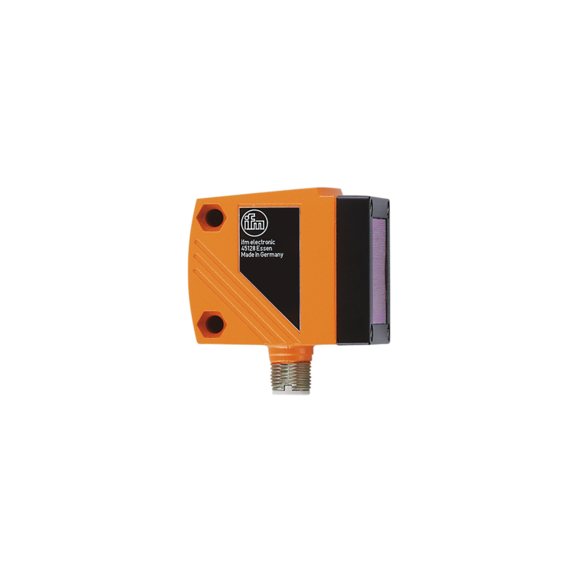 ifm O1D300Level, optical
Optical level sensor – non-contact time-of-flight measurement over long ranges.
Level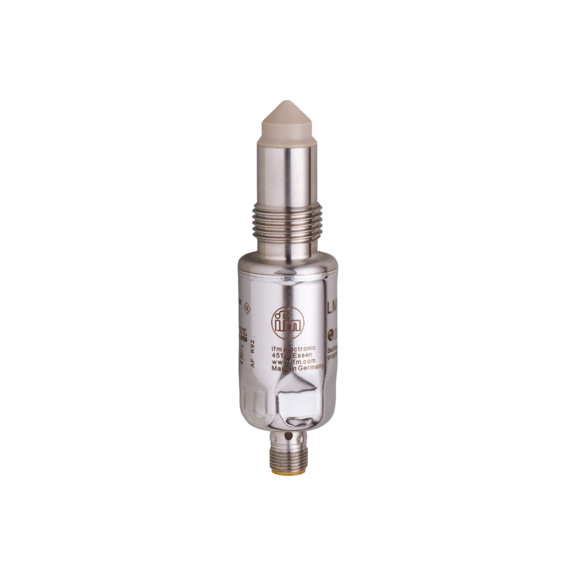 ifm LMT100Point level sensor
Point level sensor with high build-up suppression for reliable empty and full detection.
Level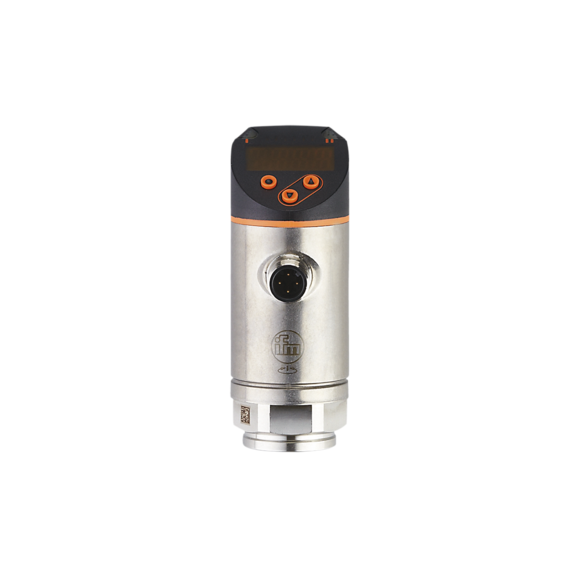 ifm PN7094Pressure sensor
Pressure sensor with a clear display for monitoring system pressure in industrial plants.
Pressure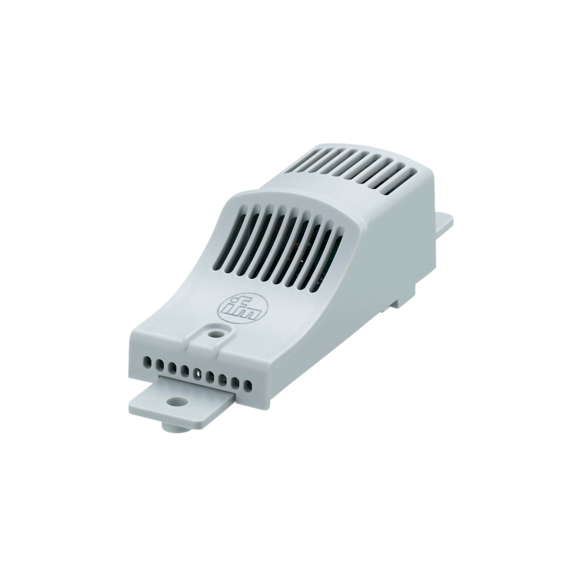 ifm LDH292Air humidity sensor
Measures relative humidity from 0…100 % RH and temperature in air and process gases – readings digital over IO-Link.
Humidity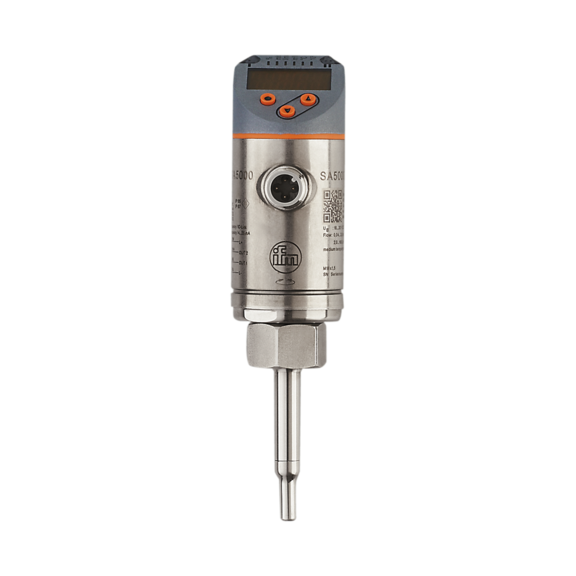 ifm SA5000Flow sensor
Flow sensor for the combined measurement of flow velocity and media temperature.
Flow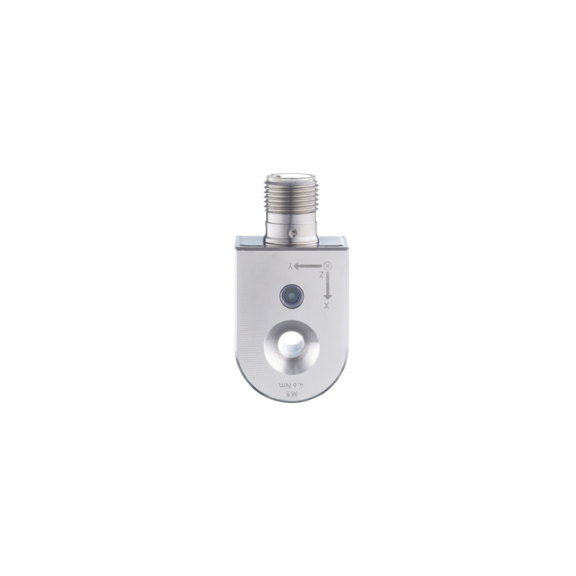 ifm VVB306Vibration sensor
Compact vibration sensor for permanent condition monitoring of rotating machinery.
Vibration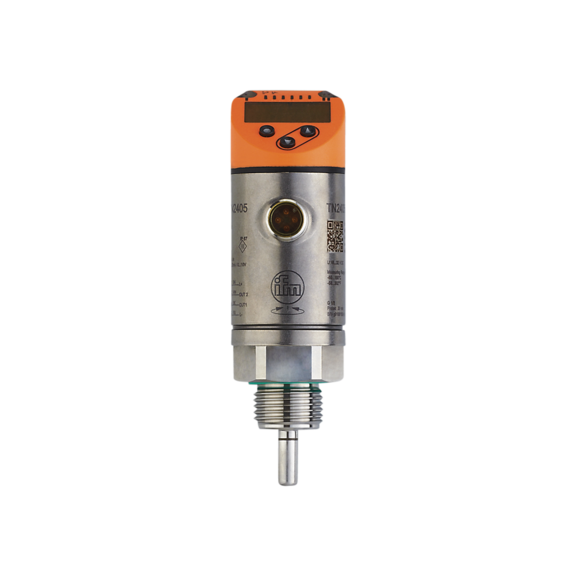 ifm TN2405Temperature sensor
Precise temperature sensor with an integrated display and fast response time for industrial processes.
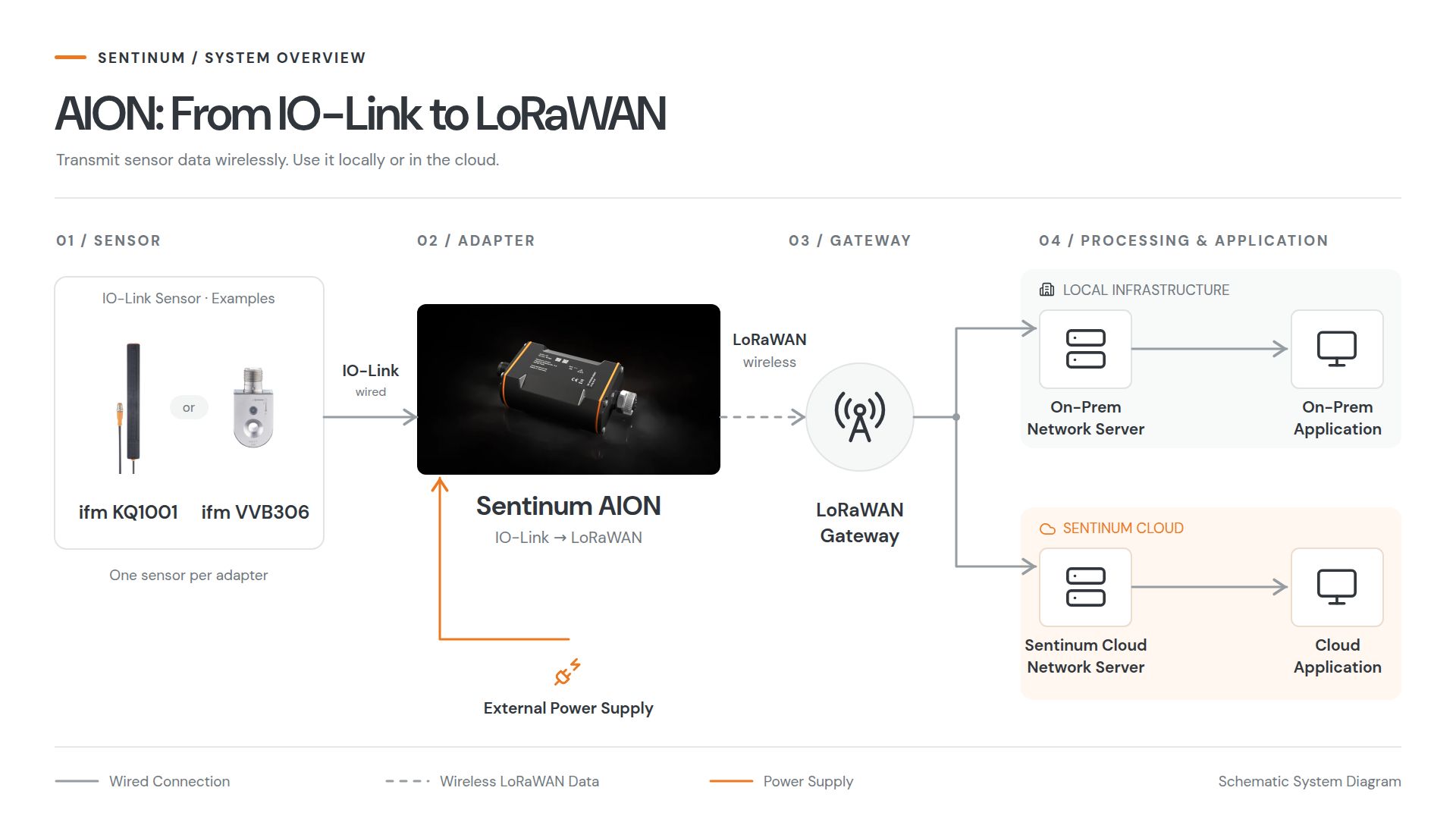
TemperatureTransmit sensor data wirelessly. Use it locally or in the cloud.
IO-Link sensor · Examples
ifm KQ1001
ifm VVB306
One sensor per adapter
IO-Link → LoRaWAN
External power supply
24 V DC
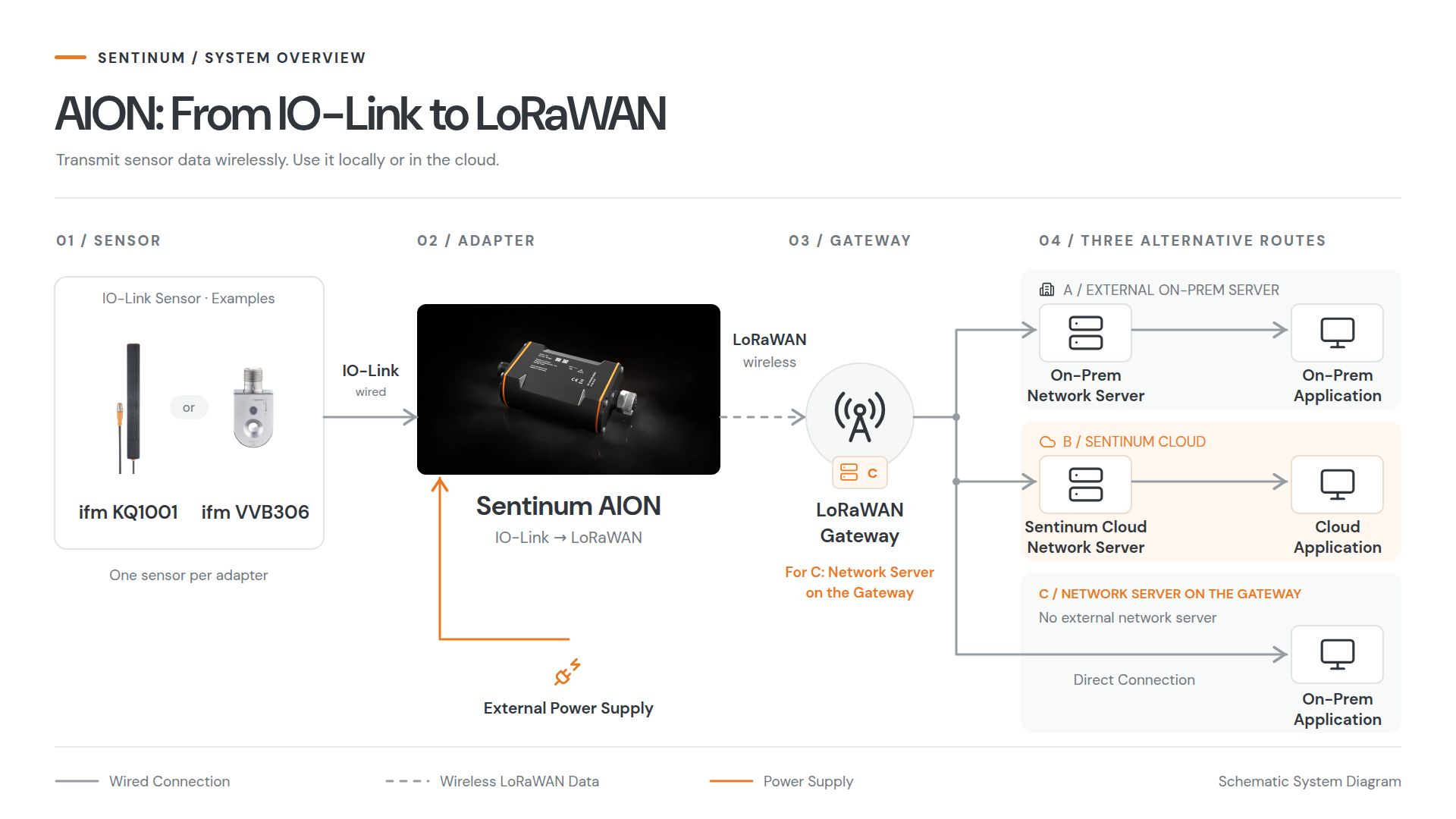
For C: network server on the gateway
On-prem network server
On-prem application
Sentinum Cloud network server
Cloud application
No external network server
Direct connection
On-prem application
LoRaWAN® is a wireless network for monitoring: periodic measurements over long distances, with many sensors sharing one network. It is built for tolerant, periodic applications – not for real time.
Kilometre-wide wireless links from sensor to gateway – even where cabling is costly or impossible.
Many sensors share one network: measure, transmit, sleep – no dedicated infrastructure per measurement point.
Intervals of minutes to hours are enough for level, temperature and condition monitoring.
The process keeps running if an uplink arrives late – monitoring, not control.
Control loops with millisecond cycle times belong in the wired control system – wireless is the wrong tool there.
LoRaWAN® transmits discrete measurement packets, not continuous time series or video streams.
Functions with safety responsibility stay in the existing automation.
AION LIO reads the sensor and sends the process data wirelessly – the control system stays untouched.
The gain is not the technology itself but the work that disappears: fewer data cables, lower investment costs, digitisation without touching the existing automation.
The data run to a gateway or controller is gone: the sensor stays where it is and reports over radio. No cable harness, no distribution, no control-cabinet work for every additional measurement signal.
No separate IO-Link master, no IO-Link-capable input on the PLC, no installation work in existing systems. Digitisation starts at the sensor – not in the automation plan.
Mount the adapter, plug in the sensor, provide the IODD – the measurements arrive. No PLC programming: an existing sensor becomes a usable data source.
Further measurement points appear where they add value – later on, and in hard-to-reach places. Another adapter instead of another cable route.
Where cable work slows digitisation down, AION LIO replaces the data path with radio – same sensing, same supply.
The sensor hangs directly on the integrated master – a separate, wired IO-Link master is not required. Process data follows the configuration of the sensor.
Stays where it is – including its 24 V DC supply.
AION LIO speaks IO-Link directly at the adapter and reads the process data. The data leaves as a wireless uplink – no data cable to a gateway.
Arriving in the network server, in the cloud or in your own evaluation.
Sensing and power supply remain as they are – only the data is transmitted wirelessly.
The adapter is designed for indoor use and configured over Bluetooth Low Energy.
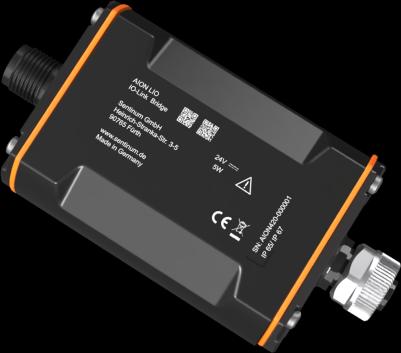 AION LIO – rear side with type label
Planned development steps. Dates and scope are provisional and are not commitments.
LoRaWAN® Class C with switching outputs to drive actuators.
View actuator outlookIODD parsing over BLE and local interpretation directly on AION LIO.
MODBUS version of the adapter.
Connected IO-Link sensors can be configured directly with AION LIO over Bluetooth Low Energy – set parameters, check readings and make adjustments, with no laptop or extra wiring.
Planned development steps; dates and scope subject to change.
Every IO-Link device ships with an IODD – an XML file describing the structure of its data. It provides names, data types, units and value ranges, replacing hand-written byte maps.
IODD & parsing explained in detailinterpreted · Illustrative example, not a real sensor reading.
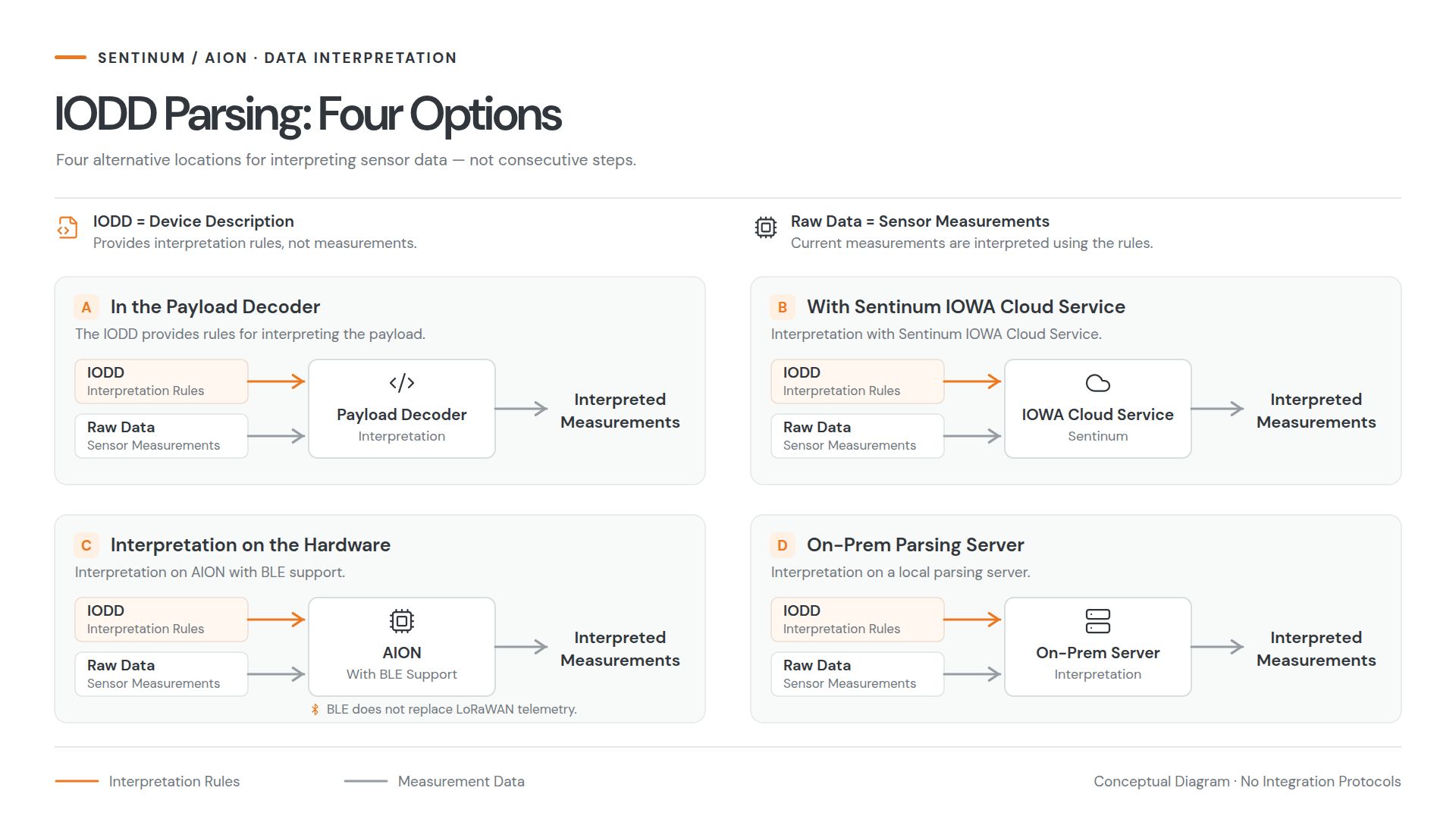
AION LIO forwards the IO-Link process data of the sensor over LoRaWAN®. Four ways exist to interpret it – two of them are available today.
Send the sensor data to our server. It is parsed using the matching IODD and returned as interpreted data.
One or more decoders per sensor, ready to use in your LoRaWAN network server or application.
Enter a payload, select the device or its IODD and receive a matching parser – free of charge, directly in the browser.
During provisioning via phone and app, the IODD parsing structure is stored on the adapter.
| # | Location | Status |
|---|---|---|
| 01 | Server / on-prem | Available |
| 02 | Network server / application | Available |
| 03 | Browser | Available |
| 04 | AION LIO | Upcoming |
Public decoder database: we are building a growing public collection of payload decoders – sensor by sensor.
Not every measurement point is IO-Link. AION420 reads existing 4–20 mA signals and transmits them over LoRaWAN® or mioty® – the familiar current loop stays, the data becomes wireless.
AION420 is additionally available as a mioty® variant – for installations with very many devices and deep network coverage. LoRaWAN® and mioty® are covered by the same adapter family.
What is mioty?2- or 3-wire sensor
Match the wiring of the transmitter.
Learn moreTerminated
The adapter ends the current loop.
Learn moreLoop-through
The current loop continues through the adapter.
Learn moreVerify wiring and PLC path against the selected variant before installation.
2 × 4–20 mA, 2- or 3-wire, LoRaWAN® or mioty® – datasheet, variants and ordering in the AION collection of the Sentinum shop.
This section will feature real customer and field installations.
01
Project photo and short description to follow.
02
Project photo and short description to follow.
03
Project photo and short description to follow.
04
Project photo and short description to follow.
05
Project photo and short description to follow.
06
Placeholder for another reference installation.
The diagrams from the system overview as image files (JPG) plus technical documents as PDF – in German or English depending on the page language.
Schematic system overview from sensor to application.
DownloadThree alternative deployment paths at a glance.
DownloadFour alternative locations for interpreting sensor data.
DownloadAION resource groups, modules and group IDs of the IO-Link adapter.
DownloadField-by-field structure of the LPWAN datagram (8–72 bytes).
DownloadTell us which sensor and which measurement task you want to connect – we advise on adapter, configuration and data interpretation, from a single decoder to an on-prem parsing setup.
Sentinum GmbHHeinrich-Stranka-Straße 3–590765 Fürth (Nuremberg)Germany
The form is provided by HubSpot and only loads after you give your consent.